Not If, But When
No matter where you're buying, natural disasters will threaten your home


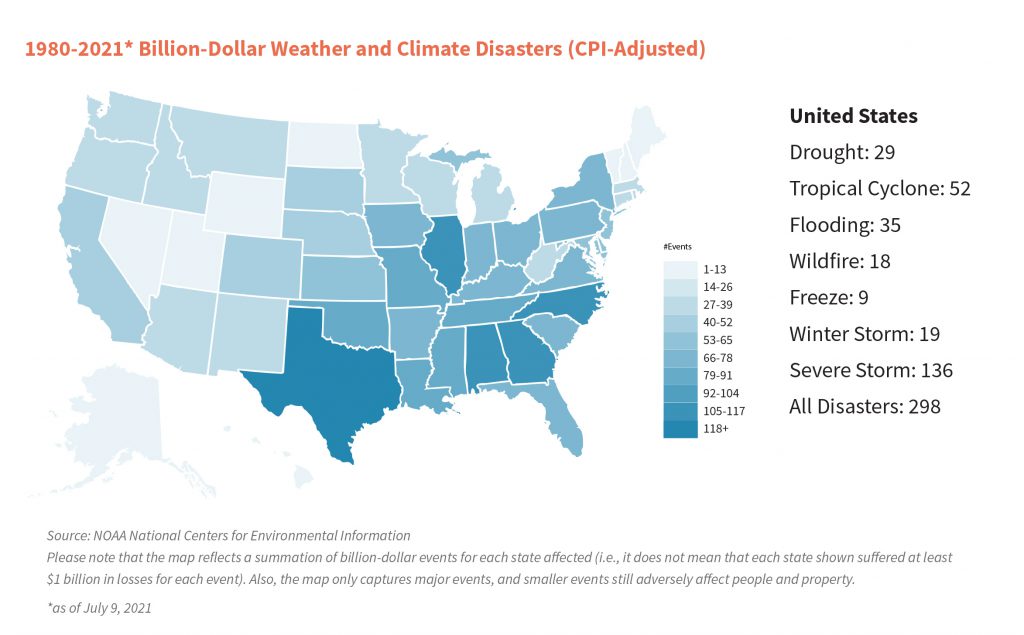
- Every state and territory faces one or more natural hazards that bring disaster risk and can vary significantly in severity.
- Disasters disrupt thousands of lives every year and have lasting emotional, financial, and physical impacts.
- Codes are continuously updated to capture new research that improves home safety and performance, so older homes built to out-of-date codes may be more vulnerable because they lack the latest innovation like increased energy efficiency or hurricane resistance.
No community is without some risk from disasters caused by natural hazards (the most common being wind, water, fire, and earthquake). Nationally, disasters disrupt tens of thousands of lives and livelihoods every year, causing lasting emotional, financial, and physical impacts on people and property. That is why it is essential to determine how resilient or vulnerable your potential home and community are before deciding where to live.
History and science offer insight into where and how disasters may occur, but most still happen without significant warning.
New homes are not necessarily stronger than older homes; there is much more to the story. The quality of the building code, construction methods, products, home location, use of beyond-code standards such as the FORTIFIED Home™ program, and the building inspection effectiveness at the time of construction can all affect home performance.
Fortunately, finding the right location with well-enforced, modern building codes can make a big difference and reduce potential damage. The stronger your home, the faster you and your family will recover after disaster strikes.
Click here to view a map of IRC building codes nationwide.
This guide will help you ask the right questions and learn more about what your current or future home can handle should the worst happen. After reading this guide, you will understand:
- The performance of your potential home during catastrophic events
- Perils that place your home at risk
- Resilient home improvement options
- Impact on home insurance costs or savings
- The total cost of ownership
Many aspects of homebuying focus on cosmetic features like granite countertops, but looking beyond the aesthetics and buying a well-built home will provide more lasting benefits and value.